How to Hear the Whalefall Director’s Commentary in Movie Theaters
Watching Whalefall once tells you what happened inside the whale.
Watching it again with the filmmakers talking in your ear tells you how they pulled it off.
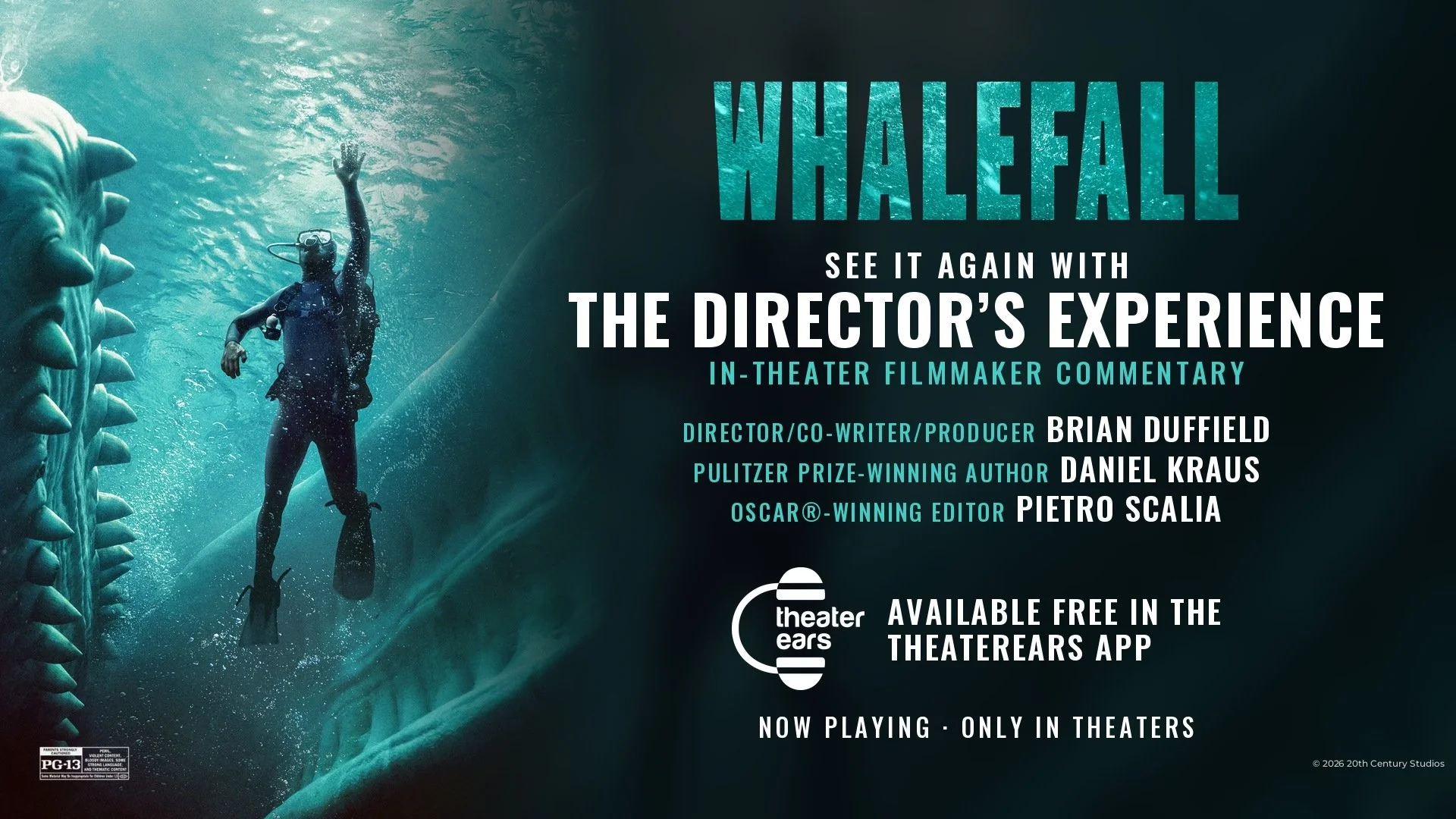
Beginning October 23, 2026, TheaterEars launched a new Director’s Experience for 20th Century Studios’ Whalefall, allowing moviegoers to hear a synchronized filmmaker commentary while watching the movie on the big screen.
And this isn't simply director Brian Duffield talking through his movie alone.
The commentary brings together three people who approached Whalefall from completely different sides of the filmmaking process:
Brian Duffield — director, co-writer and producer
Daniel Kraus — author of the original Whalefall novel and co-writer of the film
Pietro Scalia — the film's editor and a two-time Academy Award winner
The three recorded a new commentary specifically synchronized to the theatrical film, covering everything from adapting an intensely internal novel to constructing the inside of a sperm whale, working with scientific advisers, editing a story built around a rapidly disappearing oxygen supply and solving the strange practical problems that arise when most of your movie takes place inside an animal.
The commentary is available through the TheaterEars app at participating Whalefall showtimes in the United States, Canada and Puerto Rico, and the commentary track itself is free. It is presented in English.
So if you've already seen Whalefall, this isn't simply another screening.
It's essentially a filmmaking masterclass playing alongside the movie.
What Is the Whalefall Director’s Commentary?
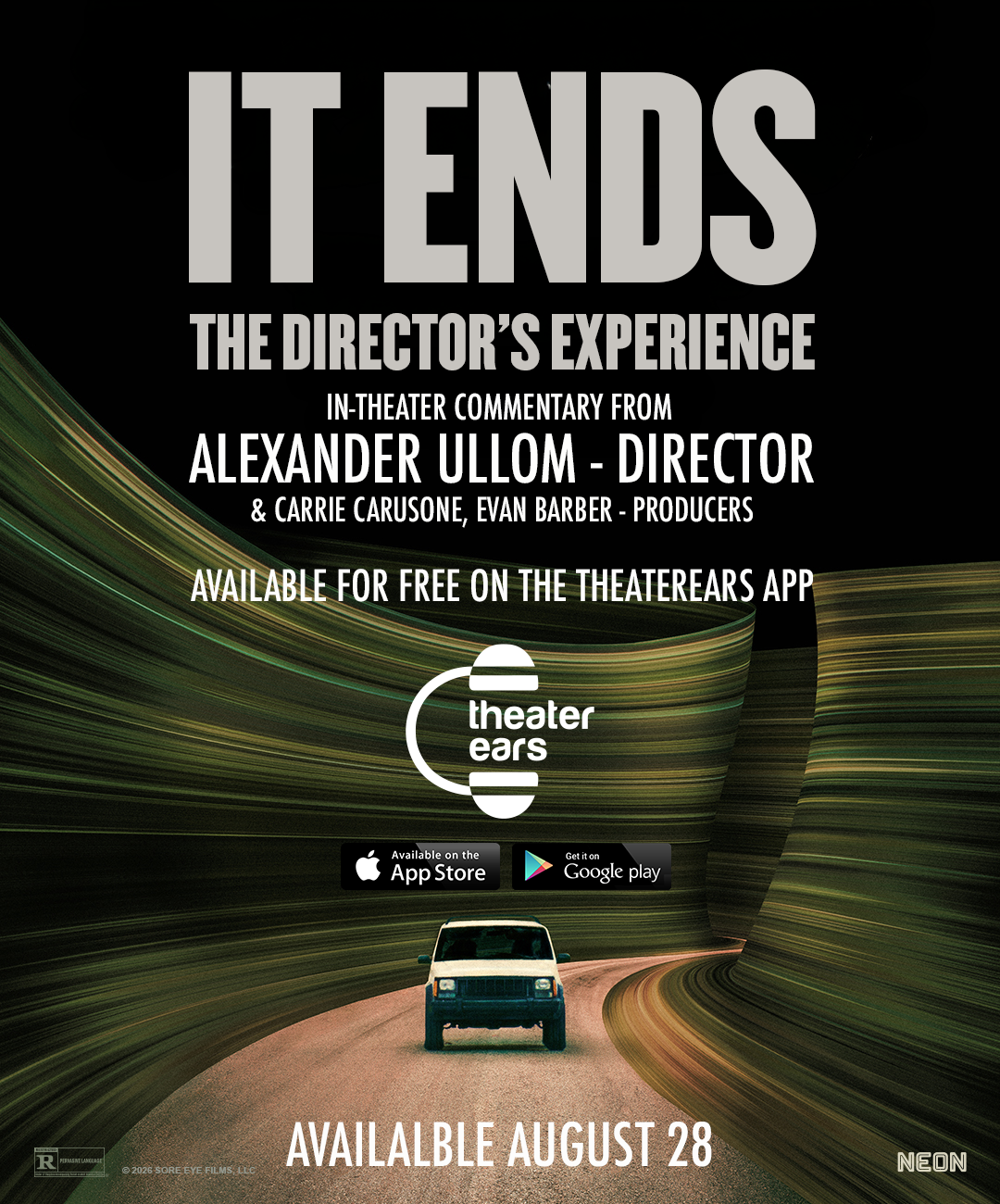
The Whalefall Director’s Experience is a synchronized audio commentary available through TheaterEars.
You watch the actual theatrical movie on the big screen.
The cinema continues playing the normal Whalefall soundtrack.
But through your own headphones, you hear:
Brian Duffield
Daniel Kraus
and
Pietro Scalia
discussing the movie as it happens.
TheaterEars automatically synchronizes the commentary to the feature so you don't need to manually line up the audio with the movie.
The result is similar to the director commentaries that became popular on DVDs and Blu-rays—
except you are listening inside the movie theater while the film is still in theatrical release.
When Did the Whalefall Commentary Become Available?
The Director’s Experience launched on:
Friday, October 23, 2026.
That's interesting because Whalefall itself opened one week earlier, on:
October 16, 2026.
20th Century Studios currently lists the movie as Now Playing Only in Theaters, with a runtime of 1 hour 46 minutes and a PG-13 rating.
The commentary therefore gives people who saw the movie during opening weekend a completely different reason to return.
Brian Duffield himself described the commentary as essentially sitting in the back of the theater with the filmmakers and pointing out the details they obsessed over while making the movie.
Is This a New Whalefall Commentary?
Yes.
This isn't an old Blu-ray commentary that TheaterEars imported into the theatrical experience.
TheaterEars describes it specifically as a:
newly recorded commentary
from Duffield, Kraus and Scalia.
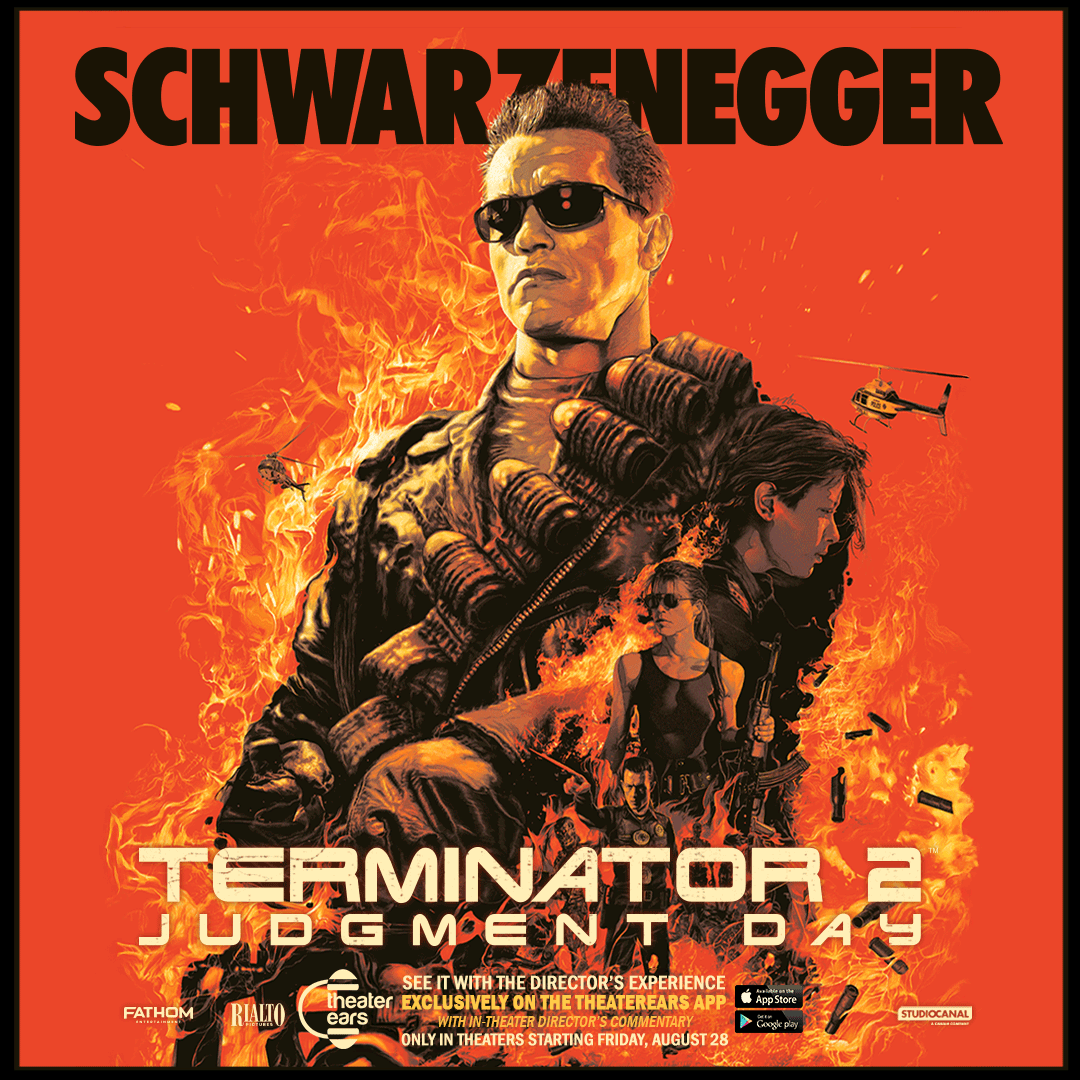
That makes Whalefall different from TheaterEars' presentation of Terminator 2: Judgment Day, where the Director's Experience brought James Cameron and William Wisher's existing original commentary into movie theaters for the first time.
For Whalefall, the commentary was created specifically around this 2026 movie and its theatrical run.
Who Is Brian Duffield?
Brian Duffield directed, co-wrote and produced Whalefall.
He previously directed:
No One Will Save You
and
Spontaneous,
and has screenwriting credits on movies including Love and Monsters and Underwater.
For Whalefall, he also co-wrote the screenplay with Daniel Kraus.
20th Century Studios officially credits Duffield as director, screenwriter and producer.
That makes his commentary especially valuable because he can explain decisions across almost every stage of production:
writing,
casting,
performance,
sets,
visual effects,
location photography,
and the final construction of the movie.
Who Is Daniel Kraus?
Daniel Kraus wrote the original novel Whalefall and then co-wrote the screenplay with Duffield.
He also won the 2026 Pulitzer Prize for Fiction for his novel Angel Down.
His Whalefall novel had already received significant recognition before becoming a movie, including an Alex Award and a Los Angeles Times Book Prize nomination.
That gives the commentary something most director tracks don't have:
the author of the original novel is sitting beside the director discussing exactly what changed when the book became a movie.
That's particularly interesting for Whalefall because the novel presents a difficult adaptation problem.
Much of what happens is internal.
Jay thinks.
Remembers.
Calculates.
Processes grief.
Processes oxygen.
Processes what his father taught him.
A novel can simply place the reader inside his mind.
A movie has to turn all of that into something you can:
see,
hear,
and feel.
The commentary explores exactly that challenge.
Who Is Pietro Scalia?
Then there is Pietro Scalia.
Scalia edited Whalefall.
But describing him simply as “the editor” undersells the résumé.
He is a two-time Academy Award winner, having won Oscars for editing:
JFK
and
Black Hawk Down.
And editing matters enormously in Whalefall.
The entire premise is based on a clock.
Jay Gardiner has approximately:
one hour of oxygen.
That means every cut affects the audience's sense of:
time,
pressure,
breathing,
claustrophobia,
and momentum.
TheaterEars says Scalia specifically discusses how the filmmakers paced a movie built around that countdown.
For anyone interested in film editing, that alone makes the commentary unusually worthwhile.
What Do They Talk About in the Whalefall Commentary?
A lot.
And unlike a commentary that simply repeats what's happening on screen, this one gets into very specific filmmaking decisions.
Here are some of the most interesting subjects.
How Do You Adapt a Book That Takes Place Inside Someone’s Head?
Daniel Kraus and Brian Duffield discuss how they transformed the original novel into a screenplay.
That problem sounds simple until you actually think about it.
Jay spends much of Whalefall:
alone,
underwater,
inside a whale.
There aren't many characters available for ordinary conversations.
There isn't a giant team constantly explaining what is happening.
The story therefore had to find cinematic ways to communicate information that Kraus could communicate internally on the page.
The commentary explores that translation between:
novel
and
movie.
How Scientifically Accurate Is the Whale?
More work went into this than audiences might expect.
Duffield and Kraus discuss working with whale anatomist Dr. Joy Reidenberg to ground the story in actual sperm-whale anatomy and biology.
Of course, Whalefall still requires suspension of disbelief.
This is a survival thriller.
But the filmmakers wanted the impossible premise to exist within an environment that felt physically convincing.
That means asking questions like:
How large is this space?
Where could Jay actually move?
What would the internal anatomy look like?
What happens as the whale dives?
How much room would he have?
The more believable those details become, the more frightening the situation becomes.
They Actually Built the Whale Interior
One of the commentary's most interesting subjects is the physical construction of the whale interiors.
Duffield discusses the practical stomach sets created with Wētā Workshop.
And according to the filmmakers, those sets were deliberately kept about as confined as they appear in the movie.
That means Austin Abrams wasn't acting in a giant comfortable soundstage that was later digitally transformed into something claustrophobic.
The physical environment itself helped create the feeling.
That's important because Whalefall depends heavily on the sensation that:
Jay cannot stand up.
Jay cannot move freely.
Jay cannot escape.
The walls are always too close.
Much of the Whale Material Was Shot in Story Order
Duffield also explains that the practical whale material was shot largely in story order.
That is not always how movies are filmed.
Normally, productions shoot based on:
locations,
actor availability,
lighting,
set availability,
and efficiency.
Scenes from the end of a movie might be shot before scenes from the beginning.
Shooting portions of Whalefall sequentially allowed the production to follow Jay's increasingly desperate physical and emotional condition more naturally.
It also meant Austin Abrams could experience the progression of the ordeal in something closer to the order the audience experiences it.
Some Scenes Set at Sunset Were Actually Shot at Sunrise
Film production frequently involves convincing audiences that they are seeing something they are not.
The commentary reveals that some scenes that appear to take place around sunset were actually filmed at sunrise.
That's the kind of detail you would probably never notice while simply watching the movie.
Once the filmmaker tells you—
you start looking differently at the scene.
That is exactly what a good commentary does.
Where Was Whalefall Filmed?
Duffield discusses filming sequences around:
Monterey Bay
San Pedro
and
Catalina Island.
Other material was filmed inside a relatively small tank in Studio City.
The commentary lets viewers distinguish between:
real ocean photography,
tank photography,
practical sets,
and computer-generated effects.
And once you know how those pieces fit together, sequences that initially look seamless become much more interesting technically.
The Monterey Canyon Is Deeper Than the Grand Canyon
The commentary also provides context for the actual environment beneath Monterey Bay.
Duffield notes the enormous depth of Monterey Canyon, helping explain why the location works so effectively for the movie's premise.
That real geography makes Jay's dive feel even more intimidating.
You're not merely imagining a vast underwater drop.
Something comparably enormous actually exists beneath that part of the California coast.
Pietro Scalia Explains How Editing Creates Claustrophobia
The movie cannot leave Jay inside the whale continuously without exhausting the audience.
So one of Scalia's challenges was deciding:
when to remain inside,
when to cut away,
when to return to Jay's memories,
and when to give the audience a moment of visual relief.
The commentary discusses the relationship between:
Jay's breathing,
the movement of water,
the flashbacks with his father,
and the timing of the cuts.
That editing creates a strange psychological effect.
The scenes outside the whale give you room to breathe.
Then the movie puts you back inside.
And the claustrophobia returns.
Why the Father-Son Story Matters
The movie's hook is:
A man gets swallowed by a sperm whale.
But that's not really what the story is about.
20th Century Studios describes Whalefall as the story of Jay Gardiner, played by Austin Abrams, searching for the remains of his late father Mitt, played by Josh Brolin. Once Jay becomes trapped inside the whale, he begins realizing that the lessons his father taught him may be the only things capable of getting him out alive.
The commentary gives Duffield and Kraus an opportunity to explain how that emotional story was preserved while converting the novel into a survival thriller.
The whale is the physical trap.
Jay's relationship with his father is the emotional one.
There Is a Pickup Scene With an Unusual Trick
One of the commentary's better behind-the-scenes stories involves a scene added after early test screenings.
The filmmakers decided the movie needed an additional family scene.
There was one problem:
Emily Rudd wasn't available.
So production used a body double.
The scene is constructed so her character Nan is either:
facing away from camera
or
positioned outside the frame.
Once you know the trick, you can watch the sequence again and see exactly how the filmmakers worked around the scheduling problem.
This is the kind of filmmaking story commentary tracks are perfect for.
Audiences see a finished scene.
The filmmakers remember:
the problem they had to solve to make that scene exist at all.
“Took the Car” Almost Became “Took the Cat”
Another tiny example:
Jay leaves a note reading:
“TOOK THE CAR, WENT TO GET COFFEE.”
Some test audiences apparently read:
CAR
as:
CAT.
That accidentally created a completely different mental image.
The filmmakers eventually used a small visual-effects adjustment to make the handwriting clearer.
It's a tiny change.
Most viewers would never notice it.
But filmmaking is filled with thousands of decisions exactly like that.
Austin Abrams Had a Rough Shoot
Playing Jay was physically demanding.
The movie requires Austin Abrams to spend enormous portions of screen time:
wet,
cold,
confined,
underwater,
or surrounded by extremely uncomfortable environments.
The commentary reveals moments when the filmmakers didn't initially realize exactly how cold Abrams had become during filming. Duffield jokes about being grateful they didn't accidentally kill their star.
It is funny afterward.
Probably considerably less funny while filming it.
Even the Jellyfish Has a Story
Jay's unusual jellyfish companion became known as:
Buddy.
The commentary discusses how the jellyfish effectively functions as both:
a strange companion
and
a source of light
during Jay's ordeal.
It is almost the Whalefall version of Wilson from Cast Away—
except significantly more translucent.
The Commentary Even Explains the PG-13 Rating Strategy
Duffield reveals that the original cut included particularly gruesome material.
Part of the strategy was apparently to push certain moments further while anticipating that the MPA would require some material to be reduced to secure the movie's eventual PG-13 rating.
That gives viewers a fascinating glimpse into another part of commercial filmmaking:
sometimes filmmakers don't simply shoot to the exact rating they expect.
They negotiate toward it.
How to Listen to the Whalefall Director’s Commentary in Theaters
The process is straightforward.
1. Download TheaterEars
The TheaterEars app is available for:
iPhone
and
Android.
The Whalefall commentary track is free through the app.
2. Select Whalefall
Inside the TheaterEars app, find:
Whalefall — The Director’s Experience
or the corresponding Whalefall commentary option for a participating showtime.
3. Select the Director’s Commentary Track
Choose the commentary audio before the feature begins.
The app loads the audio onto your phone.
4. Bring Headphones
You listen privately using your own headphones.
The rest of the auditorium hears the regular movie soundtrack.
5. Press Play and Let TheaterEars Sync
When the feature begins, press play.
TheaterEars listens to the movie soundtrack and automatically synchronizes the commentary.
The company's instructions for Director's Experience titles advise allowing up to approximately 30 seconds for synchronization.
Then put your phone away.
The commentary follows the movie automatically.
Do You Need a Special Whalefall Commentary Screening?
The experience does not require the theater to replace its normal movie soundtrack with commentary.
TheaterEars delivers the supplemental audio directly to the moviegoer's smartphone and does not require additional exhibitor hardware.
That is what makes the concept different from a conventional one-night special screening.
At a participating Whalefall showtime, you watch the same movie everyone else is watching.
You simply hear the filmmakers through your own headphones.
Check the TheaterEars app for eligible showtimes before buying your ticket.
Is the Whalefall Commentary Free?
The commentary track itself is free through TheaterEars.
You still need admission to the movie theater.
TheaterEars describes the Director's Experience as free through its app at participating showtimes.
Is the Whalefall Director’s Commentary in English?
Yes.
The commentary is:
in English.
That is separate from TheaterEars' Spanish-language movie-audio service.
For Whalefall, TheaterEars can serve different types of audiences through different audio experiences.
One viewer may want synchronized Spanish-language movie audio.
Another may want the English filmmakers' commentary.
Those are separate experiences.
Should You Watch Whalefall Normally Before Listening to the Commentary?
Probably.
The commentary is designed especially well as a second viewing.
Why?
Because Duffield, Kraus and Scalia are talking about:
how scenes were constructed,
why story decisions were made,
how effects work,
where scenes were filmed,
and what happens behind the camera.
That inevitably competes with dialogue and dramatic tension.
If you've never seen Whalefall, the normal soundtrack gives you the intended first experience.
If you've already seen it—
the commentary transforms the second viewing into something different.
Duffield himself described the Director's Experience as a reason to return after seeing the movie once.
Why Whalefall Is Perfect for a Director’s Commentary
Some movies benefit from commentary more than others.
Whalefall may be almost ideally designed for it.
Think about the questions the movie immediately creates:
How did they film this?
Is that a real set?
How much is CGI?
Could a person actually fit there?
How accurate is the whale anatomy?
Was Austin Abrams actually underwater?
How do you adapt a novel this internal?
How do you maintain suspense when we know exactly how much oxygen remains?
And:
How do you make an entire movie where your main character spends most of the runtime trapped inside a sperm whale?
Instead of searching for those answers after the movie—
the filmmakers can answer them while you're looking directly at the scenes they're discussing.
Whalefall Joins TheaterEars’ 2026 Director’s Experience Lineup
The Whalefall commentary is also part of a larger experiment happening in movie theaters during 2026.
TheaterEars' Director's Experience has already brought synchronized filmmaker commentaries into theaters for movies including:
Project Hail Mary — Phil Lord and Christopher Miller
The Mandalorian and Grogu — Jon Favreau
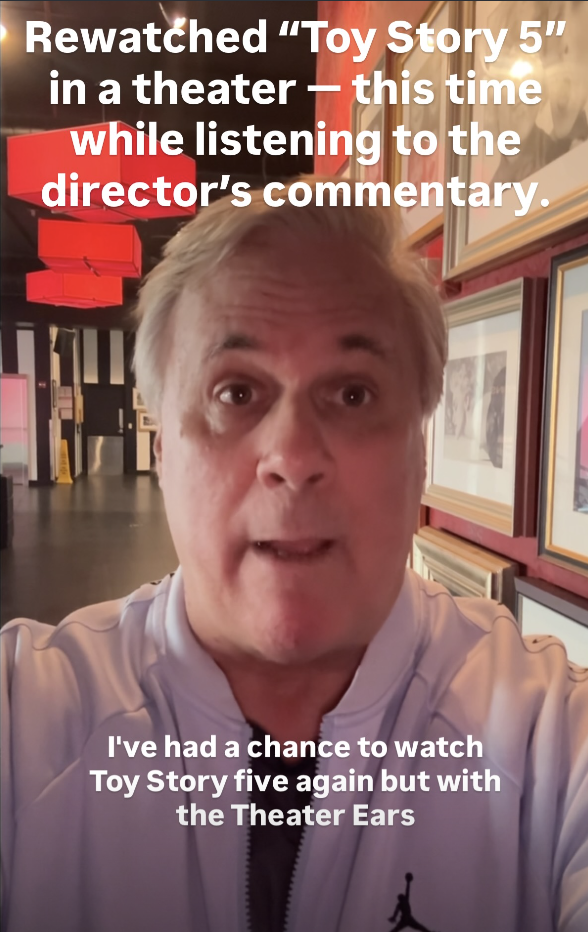
Toy Story 5 — Kenna Harris and members of the Pixar filmmaking team
Wet Hot American Summer — archival cast and filmmaker commentary
Terminator 2: Judgment Day — James Cameron and William Wisher
and other releases.
TheaterEars says its 2026 program began with the first synchronized theatrical Director's Experiences for Project Hail Mary, The Mandalorian and Grogu and Toy Story 5, later expanding the idea to archival commentary such as Terminator 2.
Whalefall takes the concept somewhere particularly interesting because the commentary was newly created around a movie while that movie was still in theaters.
Director Commentaries Used to Belong to the DVD
There is something almost backwards about what TheaterEars is doing.
For decades, director commentaries were something you discovered after the theatrical experience.
You saw the movie.
Months later you bought the:
DVD,
Blu-ray,
or special-edition home release.
Then you discovered an audio menu.
You selected:
Director's Commentary.
And suddenly you could hear the filmmakers explaining:
why a scene existed,
how an effect worked,
what went wrong,
which performances changed,
and what audiences were never supposed to notice.
It was like getting access to film school after the movie was finished.
Streaming changed that culture.
Physical-media extras became less central to how many audiences watched films.
Commentary tracks didn't disappear entirely—
but they became far less visible to mainstream moviegoers.
TheaterEars is taking that old experience and moving it in the opposite direction.
Not from theater to home.
From home back into the theater.
Frequently Asked Questions About the Whalefall Director’s Commentary
Does Whalefall have a director’s commentary?
Yes. TheaterEars launched a newly recorded synchronized commentary on October 23, 2026.
Who is on the Whalefall commentary?
Director/co-writer/producer Brian Duffield, author/co-writer Daniel Kraus, and editor Pietro Scalia.
Is Brian Duffield on the commentary?
Yes. Duffield discusses the screenplay, production, practical sets, effects, locations and other filmmaking decisions.
Is Daniel Kraus on the commentary?
Yes. Kraus wrote the original Whalefall novel and co-wrote the movie with Duffield.
Is Pietro Scalia on the commentary?
Yes. The two-time Academy Award-winning editor discusses how the movie's editing creates tension around Jay's limited oxygen supply.
Is this a new commentary?
Yes. TheaterEars identifies it as a newly recorded commentary for Whalefall.
When did the Whalefall Director’s Experience launch?
October 23, 2026.
Where is it available?
TheaterEars announced the experience for participating showtimes in the United States, Canada and Puerto Rico.
Is the commentary free?
The commentary audio is free through the TheaterEars app. You still need your normal movie-theater admission.
Is the Whalefall commentary in English?
Yes.
Do I need special theater equipment?
No additional exhibitor hardware is required. TheaterEars delivers the synchronized audio to your smartphone.
Do I need headphones?
Yes. You hear the commentary privately through your own headphones.
Does everyone in the theater hear the commentary?
No. The normal movie soundtrack continues in the auditorium while TheaterEars users hear the commentary privately.
How does TheaterEars synchronize the commentary?
The app listens to the theatrical presentation and synchronizes the supplemental audio to the movie. TheaterEars' Director's Experience instructions advise allowing up to roughly 30 seconds for synchronization.
Do I need to watch Whalefall before using the commentary?
You don't have to, but it works particularly well as a second viewing because the filmmakers openly discuss how the scenes and story were created.
Is Whalefall still in movie theaters?
Yes. As of October 31, 20th Century Studios continues to list Whalefall as Now Playing Only in Theaters.
The Best Part of a Director’s Commentary Is Hearing How the Illusion Was Built
When you watch Whalefall normally, you're supposed to forget about the filmmakers.
You're supposed to believe:
Jay is trapped.
The whale is real.
The oxygen is disappearing.
The walls are closing in.
And every decision could determine whether he survives.
That is the illusion.
The Director's Experience deliberately breaks it.
Suddenly you learn:
this part was a practical set.
That sequence used CGI.
This scene was shot somewhere completely different.
That sunset was actually sunrise.
A character wasn't available, so they used a body double.
Test audiences misread a handwritten note.
An editor moved a cut because the audience needed a moment to breathe.
A novelist had to take something that existed inside a character's mind and figure out how to make a camera see it.
And an actor spent days inside cramped, wet sets pretending to fight his way out of a sperm whale.
That doesn't ruin the illusion.
It can make the movie more impressive.
Because now you're seeing two stories at the same time.
The first is:
How does Jay escape the whale?
The second is:
How did hundreds of filmmakers convince us he was inside one in the first place?
That is what makes Whalefall such a strong fit for TheaterEars' Director's Experience.
Brian Duffield can explain the filmmaking.
Daniel Kraus can explain the story and adaptation.
Pietro Scalia can explain the rhythm.
And you can hear them discuss all of it while the exact scenes they're describing are still thirty feet tall in front of you.
Director commentaries used to be something you discovered months after leaving the cinema.
With Whalefall—
the filmmakers are coming back to the theater with you.
Verification note: This one is particularly well-supported. TheaterEars officially announced the newly recorded commentary featuring Brian Duffield, Daniel Kraus and Pietro Scalia, launching October 23, 2026, free through the app at participating showtimes in the U.S., Canada and Puerto Rico; it also explicitly states that the commentary is in English. TheaterEars 20th Century Studios confirms the film remains Now Playing Only in Theaters as of October 31 and confirms the October 16 release, cast and creative credits. 20th Century Studios
The specific behind-the-scenes examples—location/tank shooting, the pickup scene body double, the misread “car/cat” note, Buddy the jellyfish, editing choices and the PG-13 strategy—come from TheaterEars' published hands-on article about the commentary itself. TheaterEars
I also kept your formatting requirement: the article headline is the only H1; every heading beneath it is H2 or H3.