
The Mind-Blowing Science — and Quiet Controversies — Behind Project Hail Mary
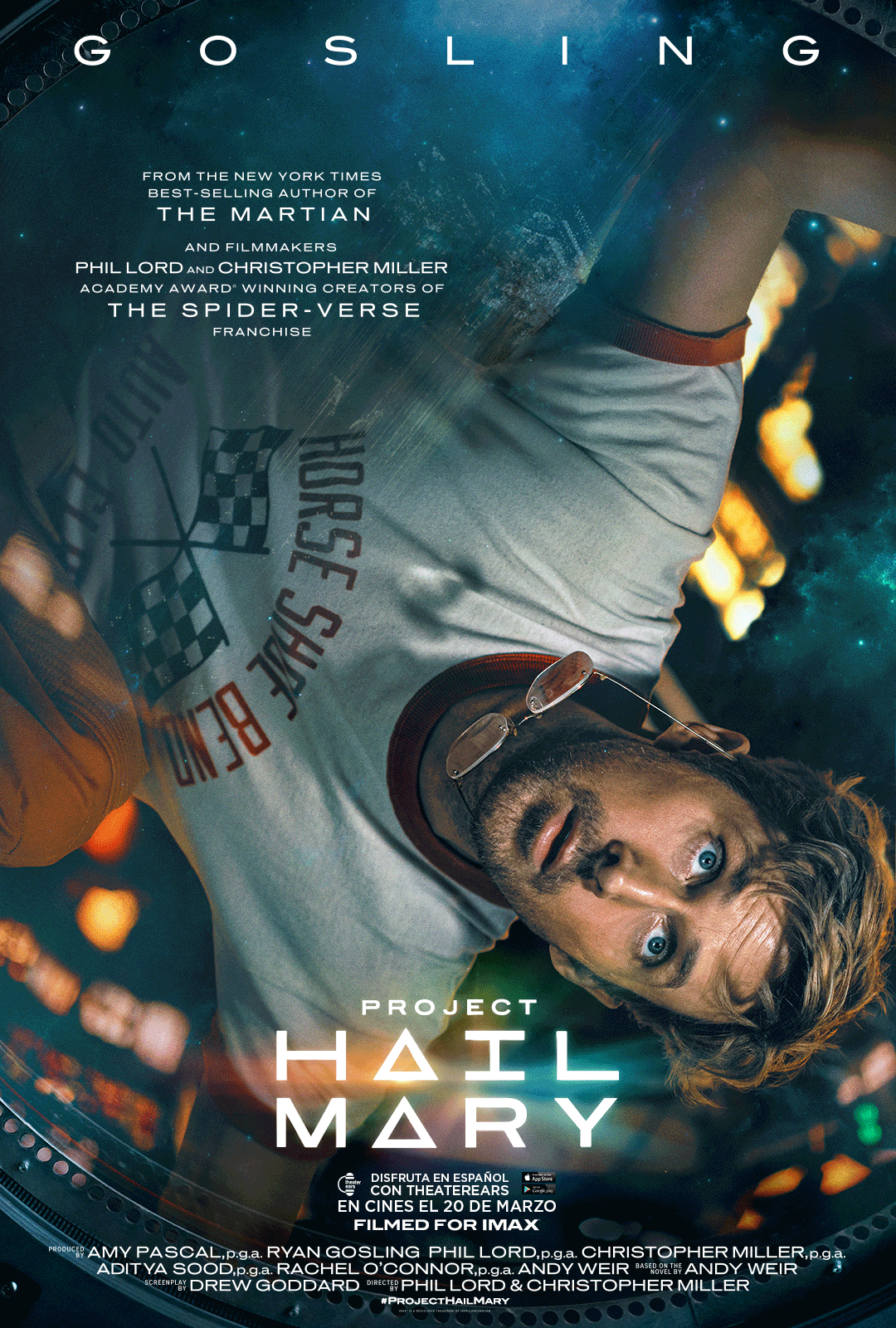
There’s a certain kind of science fiction film that doesn’t just entertain — it lingers. It reshapes how you think about space, about humanity, about what intelligence looks like under pressure.
Project Hail Mary is positioning itself to be one of those films.
Adapted from the novel by Andy Weir, the writer who turned orbital mechanics into gripping drama with The Martian, the film arrives with a rare promise: a blockbuster built not on chaos or destruction, but on curiosity, logic, and survival through thought. That alone sets it apart in a landscape dominated by spectacle.
With Ryan Gosling leading the film and the directing duo of Phil Lord and Christopher Miller stepping into more grounded territory, Project Hail Mary sits at a fascinating intersection — part intellectual puzzle, part emotional isolation story, and part large-scale cinematic gamble.
The question isn’t whether it will be ambitious.
It’s whether audiences are ready for what it’s trying to do.
🧪 A Story Driven by Science, Not Spectacle
At first glance, the premise feels deceptively simple. A man wakes up alone on a spacecraft, with no memory of how he got there. Slowly, piece by piece, he realizes that he is on a mission to save Earth from a catastrophic, extinction-level threat.
But what separates Project Hail Mary from most space narratives is how that threat is approached.
There are no armies. No weapons. No heroic last stands in the traditional sense.
Instead, the story unfolds through a series of discoveries — each one rooted in real scientific principles. Problems are introduced, tested, broken apart, and rebuilt. The tension doesn’t come from what’s chasing the protagonist. It comes from what he doesn’t yet understand.
This is very much in line with Andy Weir’s storytelling philosophy. Science isn’t decorative in his work. It isn’t there to give a sense of realism while the story does something else entirely. It is the engine of the narrative.
That means the film lives or dies on its ability to make thinking feel cinematic.
🧠 The Risk — and Power — of Intelligence as Entertainment
Modern blockbuster filmmaking has trained audiences to expect immediacy. Action. Movement. Constant escalation.
Project Hail Mary quietly resists that.
It asks something different of its audience: attention.
There is a deliberate slowness to stories like this — not in pacing, but in process. Solutions take time. Mistakes matter. The protagonist has to think his way forward, often with incomplete information, and the audience is invited to follow that process rather than skip ahead to the result.
If done well, this creates a kind of tension that is far more personal. You’re not watching someone escape danger. You’re watching them understand it.
That’s the same quality that allowed films like Interstellar and Arrival to resonate beyond the theater. They didn’t just show something happening — they made you feel the weight of figuring it out.
But it’s also where the risk lies.
There’s a fine line between immersive complexity and alienating density. Too much explanation, and the film slows. Too little, and the stakes become unclear. Striking that balance will define how Project Hail Mary is received.
🎭 Ryan Gosling Alone in Space
There’s another layer to the challenge, and it rests almost entirely on Ryan Gosling.
Much of Project Hail Mary unfolds in isolation. That means Gosling isn’t just the lead — he’s the emotional anchor, the narrative guide, and, in many ways, the audience’s only point of connection.
It’s a different kind of performance than audiences may expect from him.
Gosling has built a career on restraint — on saying less, doing less, letting stillness carry meaning. Here, he may be required to do the opposite. To externalize thought. To make internal processes visible. To carry long stretches of the film without traditional interaction.
That kind of role can go either way.
Handled poorly, it becomes distant. Too internal to engage with.
Handled well, it becomes defining — the kind of performance that reframes an actor’s entire career.
There’s already a sense, even before release, that this could be that moment for him.
🎥 Lord and Miller’s Most Surprising Move Yet
If Gosling represents the emotional shift, then Phil Lord and Christopher Miller represent the tonal one.
This is a directing duo known for energy. For humor. For films that move quickly and speak loudly. From The Lego Movie to Spider-Verse, their work has been defined by motion and momentum.
Project Hail Mary asks for something quieter.
It requires patience. Control. A willingness to let ideas breathe.
That doesn’t mean abandoning their style — in fact, their strength has always been in making complex concepts feel accessible. If anything, this project may play directly into that ability. The challenge will be knowing when to pull back, when to let silence do the work, when to trust the audience without over-explaining.
If they find that balance, this film could mark a turning point — not just for them, but for how studios view them.
⚠️ The Quiet Controversies Beneath the Surface
Unlike many major releases, Project Hail Mary hasn’t been surrounded by loud, headline-driven controversy. There are no casting scandals or production disasters dominating the conversation.
But there are quieter tensions — the kind that often matter more in the long run.
One of the most significant is the question of accessibility. The novel is beloved in part because of its scientific depth. But what works on the page doesn’t always translate to the screen. Internal reasoning, step-by-step problem solving, and extended technical explanations are difficult to visualize without losing momentum.
There’s also the weight of expectation. The Martian set a high bar for what a science-driven story could achieve both critically and commercially. Audiences may come in expecting a similar tone — hopeful, humorous, relatively grounded. Project Hail Mary is, in many ways, stranger. More abstract. Potentially more emotional.
Then there’s the broader question of audience appetite. Are viewers ready for a film that prioritizes ideas over action? Or will it feel out of step with current blockbuster trends?
None of these are fatal concerns. But they are real ones.
🌌 A Potential Turning Point for Sci-Fi
If Project Hail Mary succeeds, its impact may extend beyond its own box office performance.
It could signal a shift.
A reminder that large-scale science fiction doesn’t have to rely on destruction to feel important. That tension can come from uncertainty. That spectacle can exist in discovery, not just in scale.
For years, there has been a quiet appetite for smarter, more deliberate storytelling in mainstream cinema. Films that trust the audience. That ask more, but also give more in return.
This film feels like a test of that idea.
🌎 Watching Project Hail Mary in Spanish
For audiences who prefer to experience films in Spanish, access has historically been inconsistent. Not every theater offers Spanish-language screenings, especially during opening weekends when demand is highest.
That gap has been increasingly addressed by tools like TheaterEars, which allows viewers to listen to a synchronized Spanish-language track directly through their phones while watching the film in theaters.
👉 Download here: https://theaterears.com/download
The process is simple. You select your movie, sync the audio when the film begins, and listen through your earbuds. It’s a subtle shift in the viewing experience, but an important one — particularly for bilingual families or audiences who want to engage more deeply with dialogue-heavy films like Project Hail Mary.
⭐ Final Thoughts
There’s something refreshing about a film that doesn’t try to be everything at once.
Project Hail Mary isn’t chasing spectacle for its own sake. It isn’t built around noise. It’s built around a question:
What happens when intelligence is the only way forward?
That’s a harder story to tell. But it’s also a more lasting one.
If the film delivers on even part of its promise, it won’t just stand out in the current landscape.
It will quietly redefine what audiences expect from it.
And those are the films that tend to endure.