Paul Dano, the Controversy, and the Career Everyone Suddenly Has an Opinion About
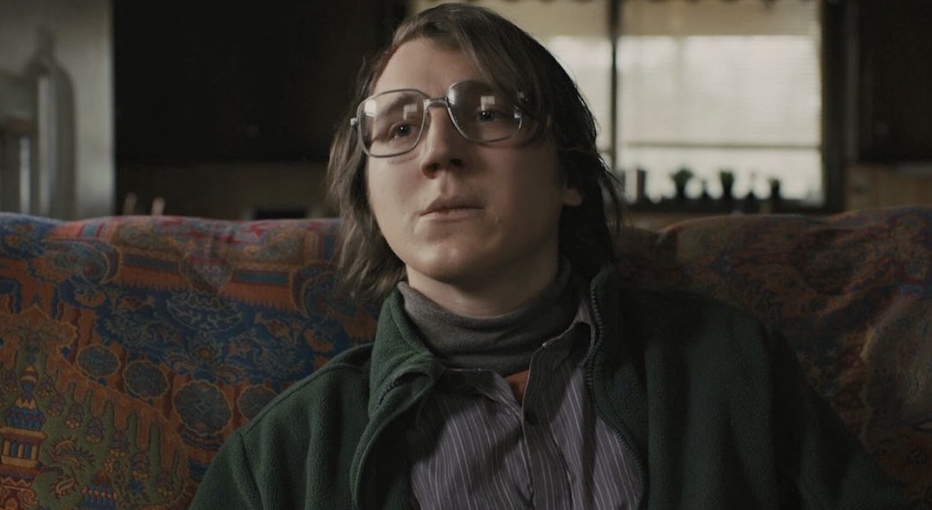
Paul Dano has spent more than two decades quietly building one of the most interesting résumés of any American actor working today. He isn’t a blockbuster superstar; he’s not the actor you see splashed across magazine covers every few months. Instead, he’s the guy directors call when they want tension, vulnerability, neurosis, gentleness, menace, or some strange hybrid of all of these at once. And ironically, that understated career is exactly why he’s now at the center of one of the internet’s loudest arguments.
Over the past week, Dano has been dragged into a controversy completely out of step with the way he works. Quentin Tarantino, in one of those completely unfiltered moments he seems to genuinely enjoy provoking, went after Dano’s performance in There Will Be Blood and called him “the weakest actor in SAG.” This instantly set off a chain reaction, with actors, directors, fans, and critics jumping in to defend Dano and, at times, tear into Tarantino’s comments.
So let’s slow this down a bit. What did Tarantino say? Why did it blow up the way it did? And more importantly: how does this conversation look when you actually take Dano’s career seriously?
What’s Actually Happening: The Tarantino Controversy
The sequence went like this. Tarantino released a list of his favorite films of the 21st century. There Will Be Blood, unsurprisingly, made the cut. But while praising the film, he took a jab so sharp it turned into the headline: according to him, Dano’s performance was the movie’s “big flaw.” He called Dano “weak sauce,” “the weakest actor in SAG,” and suggested the film would have been better — even possibly his favorite movie of the century — if someone else had played Eli Sunday.
He didn’t cushion the blow. He didn’t soften the language. It was Tarantino at full blast.
People weren’t having it.
Matthew Reeves (director of The Batman), Ben Stiller, Simu Liu, Toni Collette, and a wave of other actors pushed back publicly, saying Dano’s one of the most committed and layered performers of his generation. Fans piled in. Critics rolled their eyes. And suddenly, Dano — a guy who has never really been part of Hollywood drama — found himself at the very center of it.
At its core, this isn’t really about whether someone liked or didn’t like a performance from 2007. It’s about what we value in acting. Are we rewarding loudness? Intensity? Flash? Or is there room for quieter, more internalized work? Dano is the kind of actor who invites these questions simply because he refuses to perform the way the “biggest” actors do.
Why Paul Dano’s Acting Is So Polarizing (Even When You Don’t Expect It To Be)
Here’s the thing people forget: Dano’s acting is deliberately subtle. He’s almost allergic to big emotional outbursts unless the role demands it. His best shots are controlled; his big scenes are tense because he plays the tension, not because he explodes.
And in There Will Be Blood, he had the misfortune — or the challenge, depending on how you see it — of playing opposite Daniel Day-Lewis. Day-Lewis is a gravitational force. He’s a category of his own. Anyone standing next to him is going to look “smaller,” because Day-Lewis takes up the whole frame.
Tarantino seems to interpret that as weakness. But most directors and actors would argue that Dano’s restraint is exactly what allows Day-Lewis’s intensity to work. A movie can’t be two wrecking balls slamming into each other every ten minutes; someone has to modulate the energy.
That’s where Dano excels.
A Look Back at His Best Films
To understand why so many people defended him instantly, you only need to look at the work.
There Will Be Blood (2007)
The irony of the current debate is that this is the performance many critics point to as proof of Dano’s talent. Playing both Paul and Eli Sunday, he gives two tightly controlled performances full of insecurity, ambition, manipulation, and raw spiritual showmanship. Against the might of Day-Lewis, Dano doesn’t try to match volume with volume — he plays a man outmatched but still trying to claw for power. That’s the point.
Little Miss Sunshine (2006)
Dano’s breakout. Almost silent for half the film, he communicates everything — frustration, alienation, hope, loss — through posture and expression. When he finally does break, it’s devastating because he hasn’t been chewing scenery for an hour beforehand. It’s one of the best examples of emotional restraint done right.
Love & Mercy (2014)
If you want to see proof that Dano handles complexity better than most actors his age, this is the film. As young Brian Wilson, he disappears into the role: the genius, the anxiety, the fragile mental state unraveling under pressure. It’s a deeply empathetic performance without any vanity.
Swiss Army Man (2016)
This movie should not work. At all. And yet, Dano makes it work by committing fully to a character lost in his own loneliness. It’s tender, absurd, unsettling, and oddly beautiful. Only an actor with total sincerity could have pulled it off.
The Batman (2022)
Here’s where younger audiences discovered him again. His Riddler is chilling because he doesn’t play him as a quirky comic-book villain; he plays him as a disturbed man with a cracked logic that almost makes sense. It’s grounded, uncomfortable, and smartly pitched.
Wildlife (2018) — as Director
A lot of actors try directing; Dano actually has a voice. Wildlife is slow, tense, controlled, atmospheric. That same restraint that shows up in his acting shows up in his directing: nothing is overstated, nothing forced.
Why the Backlash Against Tarantino Was So Immediate
Tarantino is a beloved filmmaker, but he’s also a guy who loves hyperbole. People know that. And yet the reaction to his comments was unusually strong. Why?
Because even people who may not love every one of Dano’s performances get that calling him the “weakest actor in SAG” is just… silly. This is someone who has worked with Paul Thomas Anderson, Denis Villeneuve, Bong Joon-ho, Matt Reeves, Cary Fukunaga, Paolo Sorrentino, and Steve McQueen. Directors like that don’t repeatedly hire “weak” actors.
And honestly, Dano feels like an easy target precisely because he isn’t loud. He doesn’t play macho. He doesn’t do sensational interviews. He doesn’t curate a dramatic persona. He’s the opposite of what people expect from movie-star bravado.
So in a weird twist, the controversy actually reminded people why they like him.
What This Says About Acting Today
There’s a bigger conversation underneath all of this. Tarantino represents a very specific vision of performance: big, bold, explosive, theatrical. There’s room for that, obviously. It’s fun. It’s cinematic.
Dano represents something else entirely: internal conflict, unease, subtlety. Not everyone appreciates that because subtlety doesn’t announce itself. You have to pay attention for it to land.
The debate, at its core, is really a debate about what we think “good acting” looks like. And Dano became the avatar for one side of that argument.
Final Thoughts
Whether someone agrees with Tarantino’s take or not, the truth is that Paul Dano’s career speaks for itself. He’s not a failure, he’s not fragile, and he’s absolutely not the “weakest actor in SAG.” If anything, he’s one of the rare actors who has never phoned in a performance. He picks characters that require nuance. He makes choices aimed at depth, not swagger.
If Tarantino wanted attention, he definitely got it. But the moment the dust settles, Dano’s work — the actual films — will still be what defines him.
And honestly, if this controversy does anything, it might push more people to finally sit down and watch some of his best roles. Which, if we’re being real, isn’t such a bad outcome.